Tag Archives: California

Hemileuca Larvae: Do Not Touch!

On a recent hike near Carson Pass in Alpine County, I encountered this critter crawling vigorously across a dry swale in the subalpine dwarf-shrub steppe at 8,900 feet.
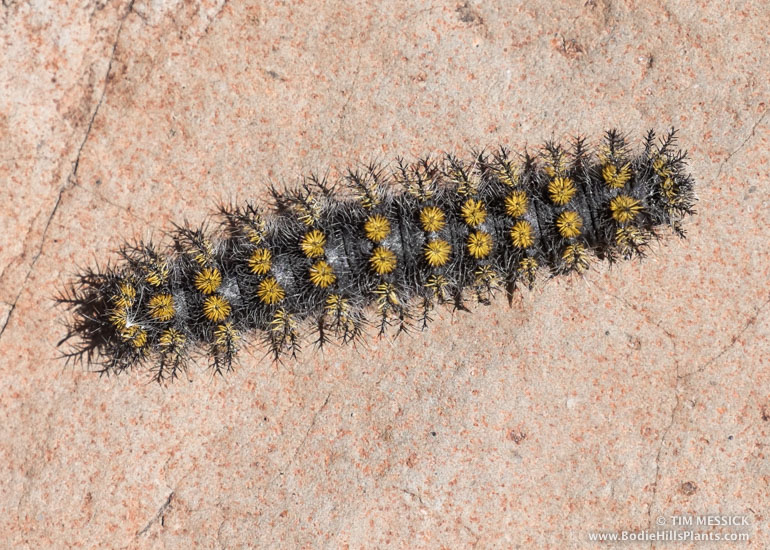
Hemileuca heraHemileuca hera larva

It was about the size of my little finger and was about to disappear under an Eriogonum, so I coaxed it onto a stick and moved it to a large rock, where I took pictures while it resumed its ascent toward Red Lake Peak. The spines all over its body made it look about as fun to handle as a cholla cactus or porcupine, so I used the stick to prevent any direct contact.

That was a good thing, because on doing an image search in Google and checking further on Butterflies and Moths of North America and Bug Guide, I narrowed it down to Hemileuca hera, the Hera buck moth or Sagebrush sheep moth. The larvae of Buck moths and the related Io moths (both Saturniids) are well known for the extremely painful, persistent, burning, swelling stings produced when the spines inject their toxin into your skin.
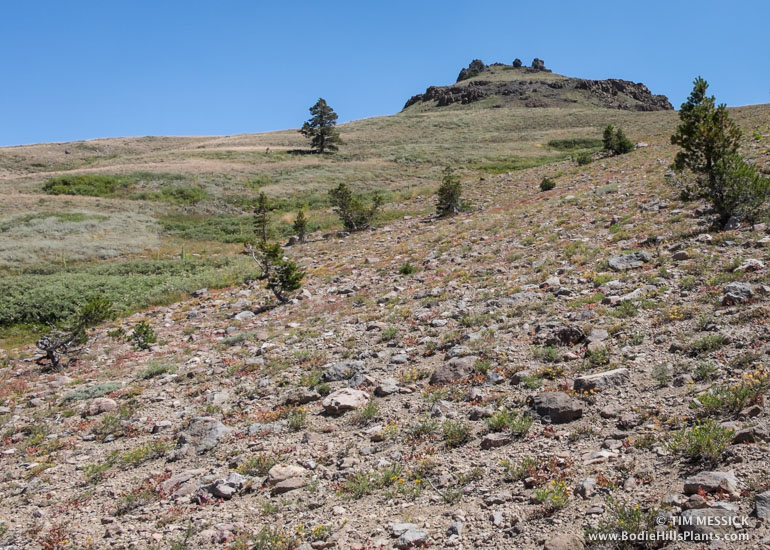
Hemileuca habitatHemileuca hera habitat

An article on the University of Florida’s Featured Creatures site advises that “Not handling caterpillars that have spines is one of the best ways to avoid receiving stings.” Obvious, but sensible advice. Should you, however, inadvertently come into contact with one of these beautiful creatures, the wound should be treated by “washing the site immediately in order to remove any loose spines that might be present. The site should be allowed to dry without the use of a towel. Any remaining spines should then be removed with an adhesive such as duct tape. Finally you can apply ice packs to the site to relieve some of the pain.”

Hemileuca hera has been seen in the Mono Basin and it ranges across much of the Intermountain region, so it is likely to be present in the Bodie Hills. The larvae feed on sagebrush. The adults have striking white and black patterns on their wings.


Copyright © Tim Messick 2015. All rights reserved.

July Flowers in the Bodie Hills

Here’s a very small sampling of plants observed in the Masonic Mountain area of the northern Bodie Hills a few weeks ago. After the very dry winter and spring of 2015, it seemed likely there would be very little in bloom this year. But then unusually high rainfall in May and June made a big difference, and there’s a lot to be seen this summer after all.

Castilleja linariifolia
Castilleja linariifolia, Desert paintbrush

Opuntia polyacantha
Opuntia polyacantha var. erinacea, Grizzlybear pricklypearErigeron aphanactis
Erigeron aphanactis, Rayless shaggy fleabaneMimulus nanus
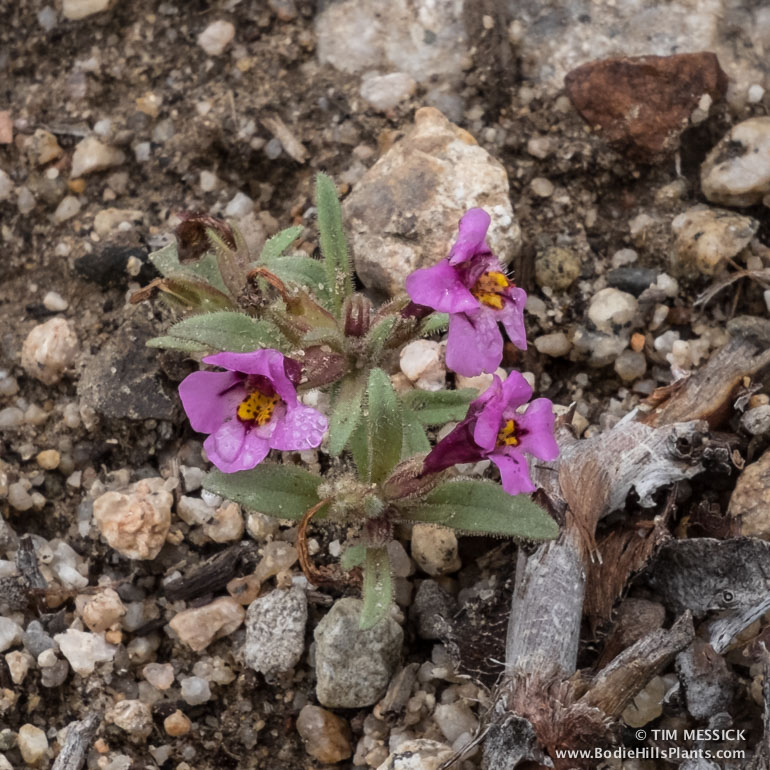
Mimulus nanus var. mephiticus, Skunky monkeyflower

Cryptantha circunscissa
Cryptantha circumscissa, Cushion cryptantha

Eriogonum nidularium

Eriogonum nidularium, Birdnest wild buckwheatEriogonum nidularium
Eriogonum nidularium, Birdnest wild buckwheat, up close

Osmorhiza occidenralis
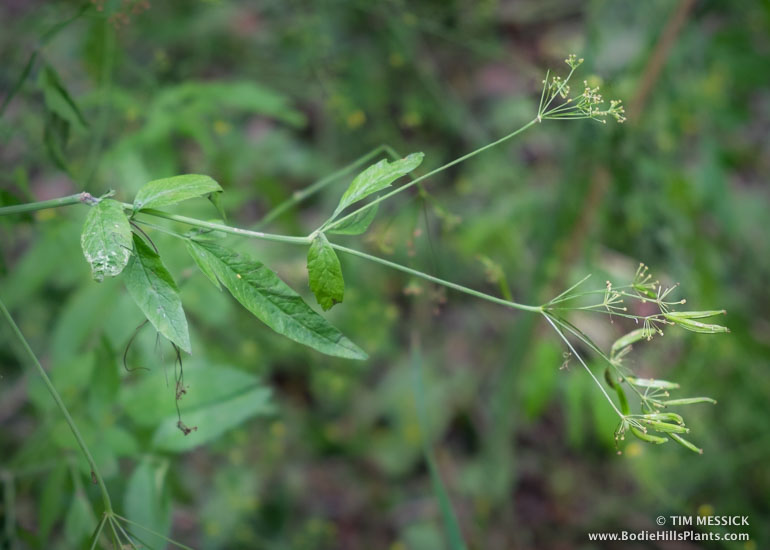
Osmorhiza occidentalis, Western sweet cicely (past flowering, but with its distinctive fruits)Phacelia hastata
Phacelia hastata var. hastata, Mountain phacelia Monardella odoratissima
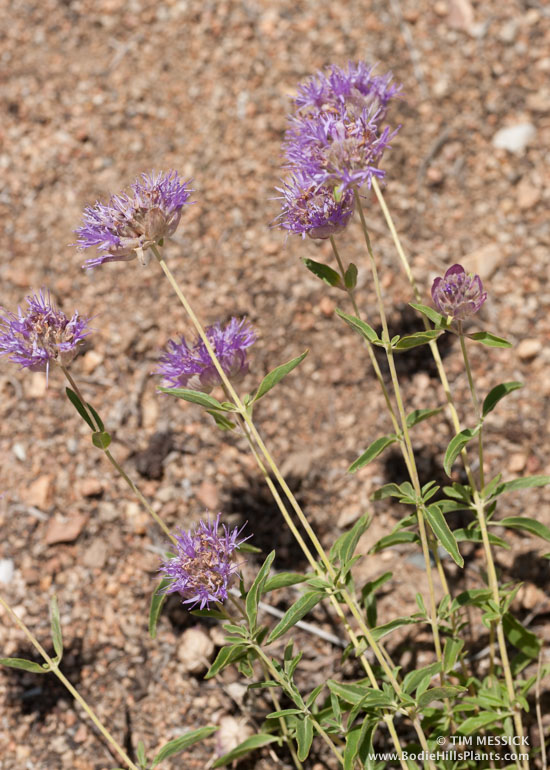
Monardella odoratissima, Mountain pennyroyal


Copyright © Tim Messick 2015. All rights reserved.

A Native Peony in the Bodie Hills

Peonies are familiar to most people from their many cultivated varieties and the nearly 40 species that range across Eursia from Spain to Japan. Only two occur in the western hemisphere: Paeonia californica (mostly in the coastal ranges of southern California and northern Baja California) and Paeonia brownii (from the Sierra Nevada, North Coast Ranges, and Cascade Range to Wyoming).

Paeonia browniiPaeonia brownii near Lakeview Spring

Paeonia brownii is fairly common in dry pine forests, sagebrush scrub, and aspen groves in mountains from central California, Nevada, and Utah to Washington and Idaho. In the Bodie Hills I’ve seen it only among aspens in the Lakeview Spring area, but it’s likely to be present in or near some other large aspen groves as well.

Paeonia brownii

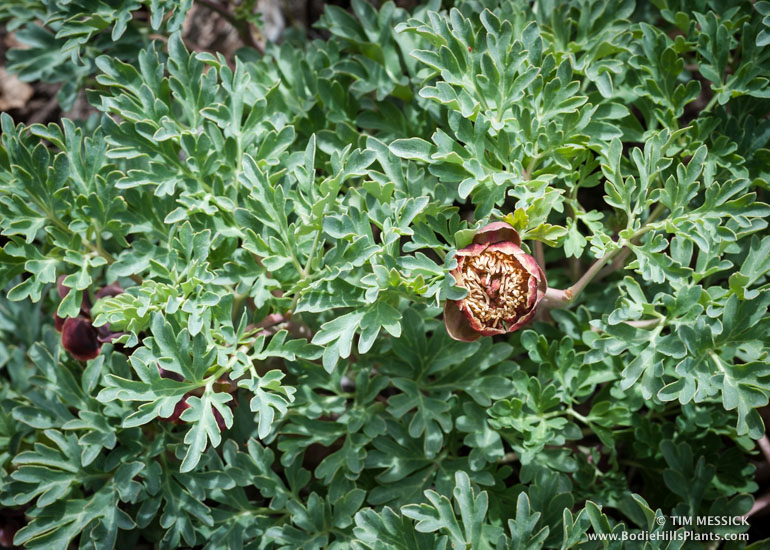
It’s easy to recognize—nothing else in its range looks like this plant. It’s a low, mound-shaped perennial herb, up to a foot or so tall. The large, slightly fleshy, green to bluish-green leaves are ternately (3 times) divided, with the outermost lobes more-or-less elliptic in shape. The primitive-looking flowers usually hang downward. Their leathery, maroon-colored sepals and petals enclose a dense cluster of yellow stamens.

A couple of interesting notes on the ecology of Brown’s peony: The flowers are pollinated mostly by Vespid wasps (e.g., queen hornets), Syrphid flies (flower flies), and Halictid bees (sweat bees) (Bernhardt et al. 2013). The seeds are large enough to be attractive to seed-caching rodents, like chipmunks, deer mice, and pocket mice, but are not as nutritious or as abundant as the seeds of pine trees. This may benefit the peony in that the rodents help disperse the seeds to their caches, but are slow to consume them, so some of the seeds survive to germinate (Barga and Vander Wall 2013).

References

Barga, Sarah C., and Stephen B. Vander Wall. “Dispersal of an herbaceous perennial, Paeonia brownii, by scatter-hoarding rodents.” Écoscience 20.2 (2013): 172-181.

Bernhardt, Peter, Retha Meier, and Nan Vance. “Pollination ecology and floral function of Brown’s peony (Paeonia brownii) in the Blue Mountains of northeastern Oregon.” Journal of Pollination Ecology 11 (2013).


Copyright © Tim Messick 2015. All rights reserved.