Tag Archives: Mono County

July Flowers in the Bodie Hills

Here’s a very small sampling of plants observed in the Masonic Mountain area of the northern Bodie Hills a few weeks ago. After the very dry winter and spring of 2015, it seemed likely there would be very little in bloom this year. But then unusually high rainfall in May and June made a big difference, and there’s a lot to be seen this summer after all.

Castilleja linariifolia
Castilleja linariifolia, Desert paintbrush

Opuntia polyacantha
Opuntia polyacantha var. erinacea, Grizzlybear pricklypearErigeron aphanactis
Erigeron aphanactis, Rayless shaggy fleabaneMimulus nanus
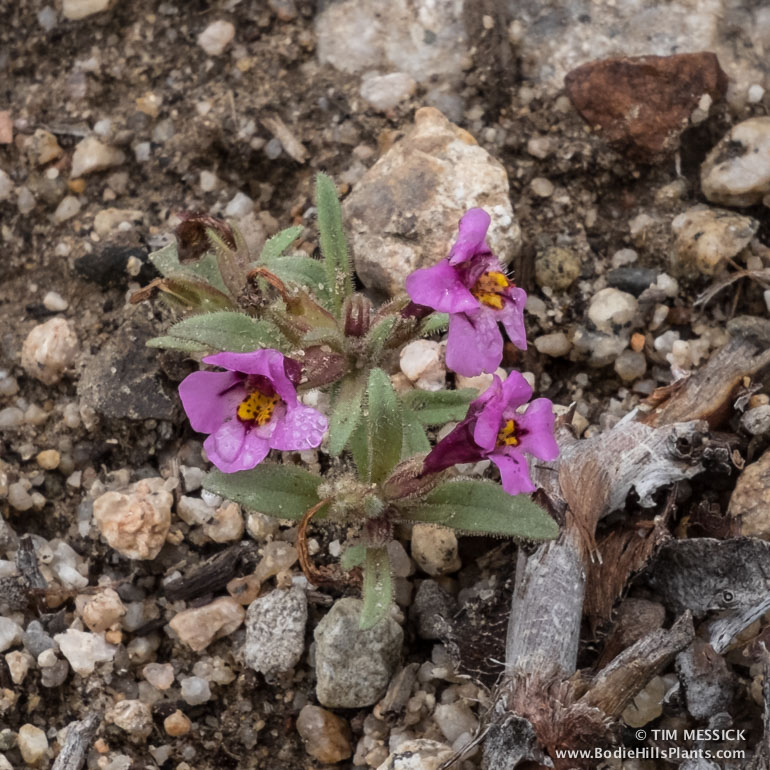
Mimulus nanus var. mephiticus, Skunky monkeyflower

Cryptantha circunscissa
Cryptantha circumscissa, Cushion cryptantha

Eriogonum nidularium

Eriogonum nidularium, Birdnest wild buckwheatEriogonum nidularium
Eriogonum nidularium, Birdnest wild buckwheat, up close

Osmorhiza occidenralis
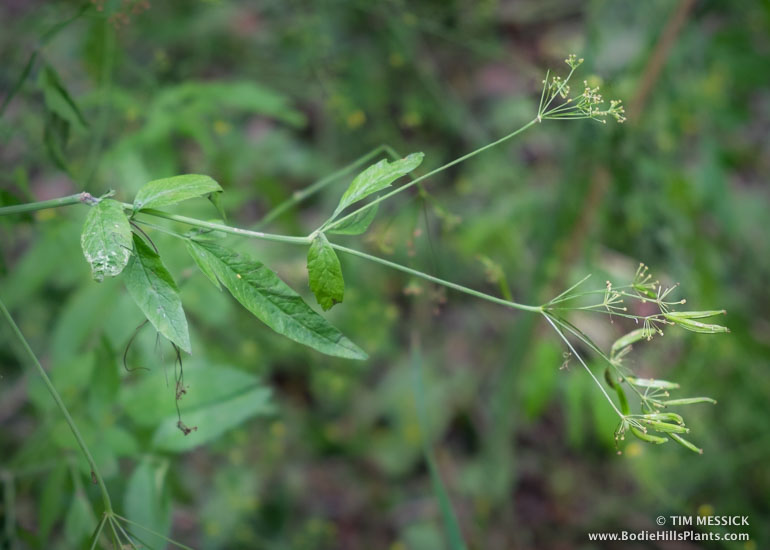
Osmorhiza occidentalis, Western sweet cicely (past flowering, but with its distinctive fruits)Phacelia hastata
Phacelia hastata var. hastata, Mountain phacelia Monardella odoratissima
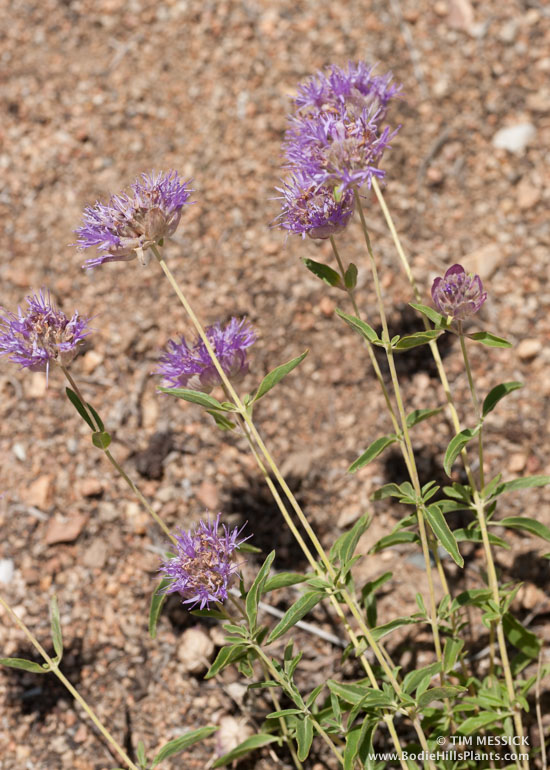
Monardella odoratissima, Mountain pennyroyal


Copyright © Tim Messick 2015. All rights reserved.

A Native Peony in the Bodie Hills

Peonies are familiar to most people from their many cultivated varieties and the nearly 40 species that range across Eursia from Spain to Japan. Only two occur in the western hemisphere: Paeonia californica (mostly in the coastal ranges of southern California and northern Baja California) and Paeonia brownii (from the Sierra Nevada, North Coast Ranges, and Cascade Range to Wyoming).

Paeonia browniiPaeonia brownii near Lakeview Spring

Paeonia brownii is fairly common in dry pine forests, sagebrush scrub, and aspen groves in mountains from central California, Nevada, and Utah to Washington and Idaho. In the Bodie Hills I’ve seen it only among aspens in the Lakeview Spring area, but it’s likely to be present in or near some other large aspen groves as well.

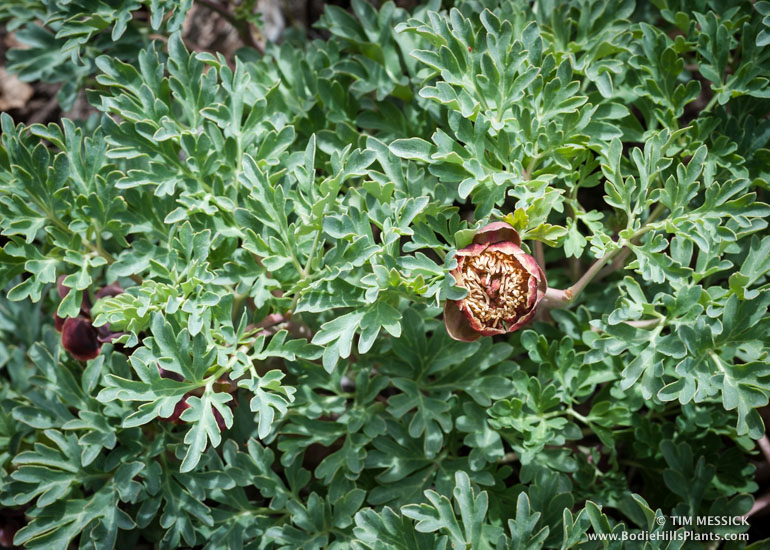
Paeonia brownii

It’s easy to recognize—nothing else in its range looks like this plant. It’s a low, mound-shaped perennial herb, up to a foot or so tall. The large, slightly fleshy, green to bluish-green leaves are ternately (3 times) divided, with the outermost lobes more-or-less elliptic in shape. The primitive-looking flowers usually hang downward. Their leathery, maroon-colored sepals and petals enclose a dense cluster of yellow stamens.

A couple of interesting notes on the ecology of Brown’s peony: The flowers are pollinated mostly by Vespid wasps (e.g., queen hornets), Syrphid flies (flower flies), and Halictid bees (sweat bees) (Bernhardt et al. 2013). The seeds are large enough to be attractive to seed-caching rodents, like chipmunks, deer mice, and pocket mice, but are not as nutritious or as abundant as the seeds of pine trees. This may benefit the peony in that the rodents help disperse the seeds to their caches, but are slow to consume them, so some of the seeds survive to germinate (Barga and Vander Wall 2013).

References

Barga, Sarah C., and Stephen B. Vander Wall. “Dispersal of an herbaceous perennial, Paeonia brownii, by scatter-hoarding rodents.” Écoscience 20.2 (2013): 172-181.

Bernhardt, Peter, Retha Meier, and Nan Vance. “Pollination ecology and floral function of Brown’s peony (Paeonia brownii) in the Blue Mountains of northeastern Oregon.” Journal of Pollination Ecology 11 (2013).


Copyright © Tim Messick 2015. All rights reserved.

Cacti of the Bodie Hills

The cacti of the Bodie Hills are not difficult to master. There are only two of them: a Prickly-pear and a club-cholla. Opuntia polyacantha and Grusonia pulchella are both in subfamily Opuntioideae, and Grusonia was formerly included in the mega-genus Opuntia. That large and diverse genus is now treated in Flora North America and the Jepson eFlora as several separate genera. This isn’t just fine-grained splitting; Opuntia is still large, and the other smaller genera are easily distinguished in the field based on the shape of stem segments, overall growth form, and the presence or absence of spine sheaths. All Opuntioid cacti are armed with two kinds of spines: large, smooth, fixed spines and small, hairlike prickles called glochids, that will easily (and painfully) detach from the plant and penetrate your skin.

Key to Cactaceae in the Bodie Hills
1. Stem segments bilaterally flattened, circular, ovate, or obovate; flowers yellow to greenish-yellow;
throughout the Bodie Hills. . . .  Opuntia polyacantha
1’ Stem segments cylindric to ± spheric; flowers rose to purple;
north and east foothills of the Bodie Hills. . . .  Grusonia pulchella

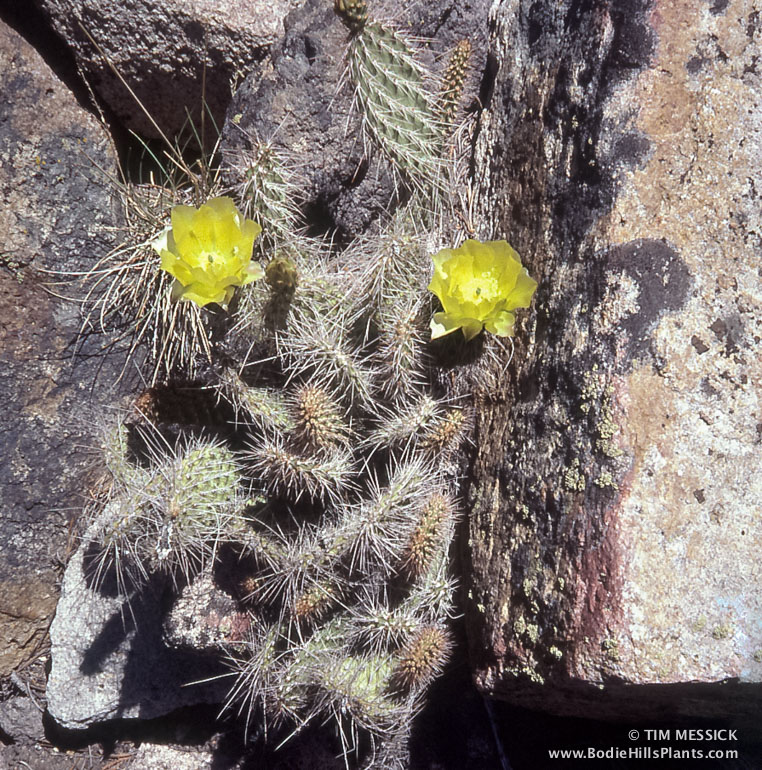
Opuntia polyacantha

Opuntia polyacantha (above) is a prickly-pear cactus densely clothed in long spines. Common names include Grizzly bear prickly-pear, Mojave prickly-pear, and Plains prickly-pear, and (probably in Texas and Oklahoma) Panhandle prickly-pear. In the Bodie Hills, it’s fairly common on rocky outcrops, talus slopes, and occasionally among sagebrush. The plants are usually widely scattered, never numerous in one location.

This is a very widespread species (in virtually all of the western U.S. and Canada, plus scattered counties as far east as Missouri). There are several varieties. O. p. var. erinacea is the one commonly encountered throughout the Bodie Hills and across the Great Basin, Colorado Plateau, and Mojave Desert. One collection in 1945 (UC733179: Roxana S. Ferris and Laura Lorraine, 11027) from the New York Hill area—part of Masonic Mountain—was identified as O. p. var. hystricina. This could be accurate, but ought to be checked in the field. Var. hystricina (“Porcupine prickly-pear“) occurs mostly in southern Utah and nearby areas of adjoining states.

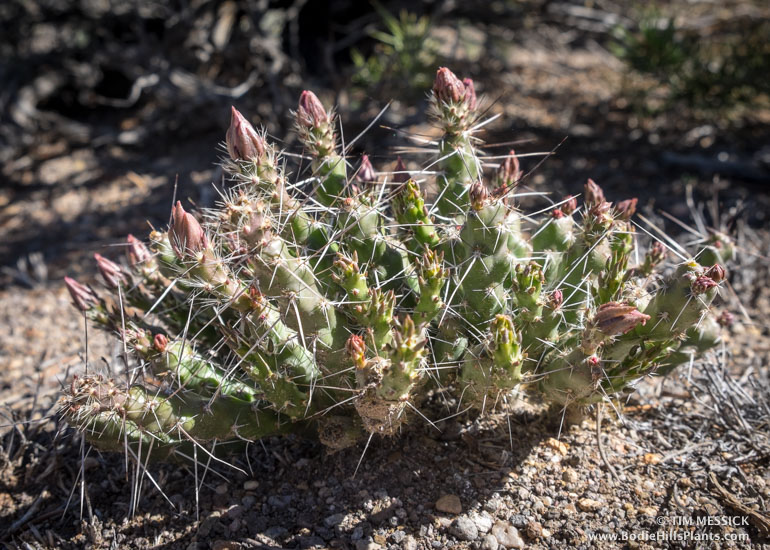
Grusonia pulchella

Grusonia pulchella (above) is a club-cholla that also has long spines, but generally less dense than in the Opuntia. Common names include Beautiful club-cholla and Sagebruch cholla. This plant “differs from other North American Opuntioid cacti in having a geophytic habit, where above-ground growth dies back to the crown in adverse conditions, and resprouts under more favorable conditions.” Here are some other photos of it, in flower.

Grusonia pulchella is found through much of the Great Basin, mostly in Nevada and Western Utah. In California it is recorded only from Deep Springs Valley in Inyo County. In the Bodie Hills, all occurrences are probably in Nevada.


Copyright © Tim Messick 2015. All rights reserved.