

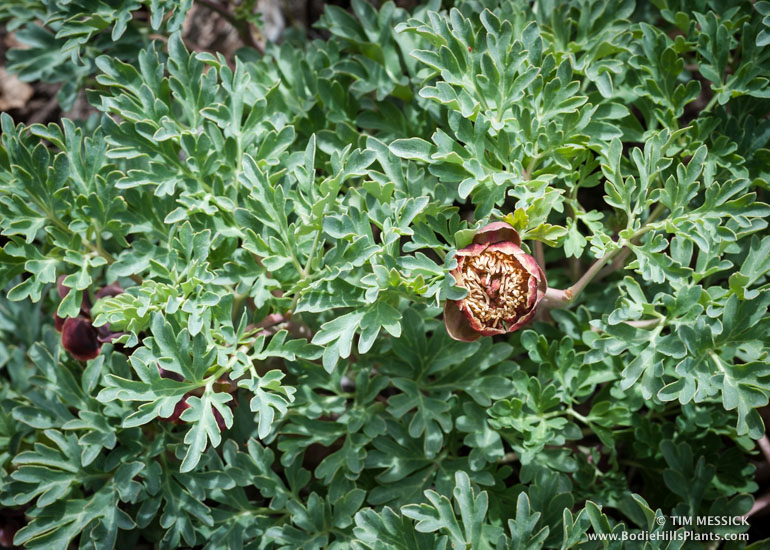
Lewisia rediviva var. minor
A year ago I decided to update the “Flora of the Bodie Hills” I had written 3.3 decades ago as my MA thesis at Humboldt State University. Why? There have been many nomenclatural and taxonomic changes in the flora, many more species have been found by subsequent collectors in the area, and there is now greatly simplified access to all this information through the internet. The Bodie Hills are rich in plants, wildlife, human history, geological interest, and recreational opportunities. More than ever, the natural resources of the Bodie Hills should be explored, documented, managed, and protected for all who enjoy the area.
 Plants of the Bodie Hills, an Annotated Checklist is a free, 47-page PDF document (5.1 MB), available for DOWNLOAD HERE. This first edition is dated January 3, 2016. Future editions will be released occasionally, as additions and corrections are made. This annotated checklist is an alphabetized list of plants by family and scientific name, with notes on distribution, habitat, and information gleaned from herbarium specimens. There are currently no keys, photographs, or illustrations, but I hope to add these in the future. Meanwhile, selected keys, photos, and other natural history notes will be posted occasionally here at BodieHillsPlants.com.
Let me know what you think! And please tell me if you find additional plants in the Bodie Hills or errors that need correcting. Leave a comment below, go to the Contact Page, or email me at tmessick1[at]gmail.com. Thanks!

Masonic Upper Town (site) and the road south to Bodie
Copyright © Tim Messick 2016. All rights reserved.
DOWNLOAD THE CHECKLIST

 Plants of the Bodie Hills