Category Archives: Botany

Some Additions to the Bodie Hills Flora

The northern Bodie Hills

Last weekend (in mid-May, 2017), I hit the jackpot (appropriately, as this was in Nevada) for interesting plants in one part of the Bodie Hills. It was along the northern perimeter of the Bodie Hills, mostly in Lyon County, along the Sweetwater-Aurora Road (NF-028) and some side roads, ridges, and ravines. The diversity and abundance of native annual and perennial plants in flower was delightful! At least 5 species (and 4 genera) were new additions for the checklist:

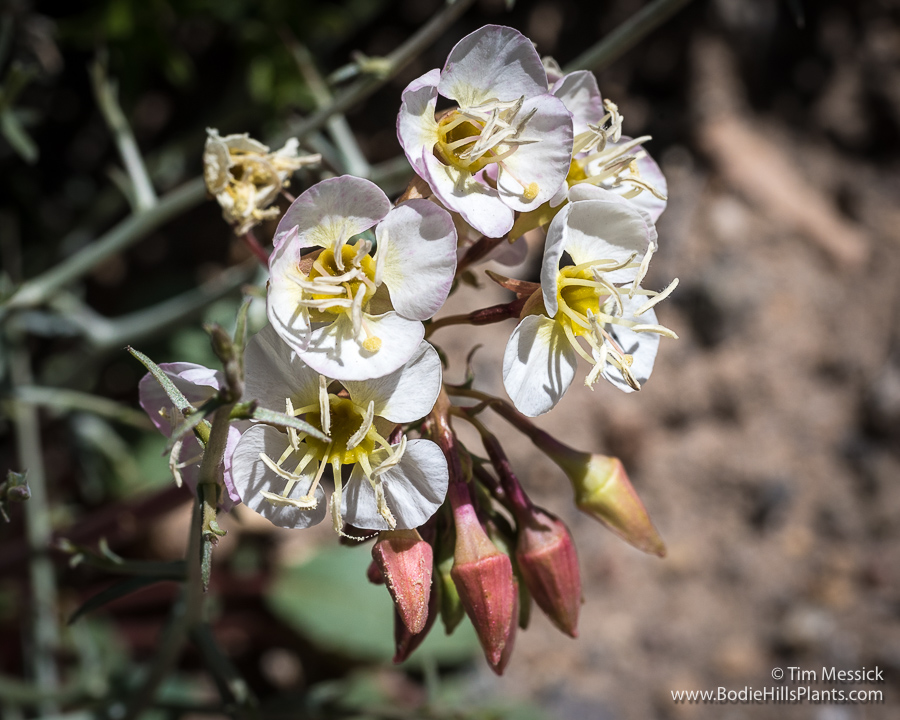
Eremothera nevadensis

Nevada suncup (Eremothera nevadensis) was widespread in openings among low sagebrush throughout the low northern foothills of the range. Eremothera was formerly treated as a Section of the widespread evening-primrose or suncup genus Camissonia. Nevada suncup apparently has a somewhat limited distribution in west-central Nevada, and has yet to be found across the state line in California.

Eremothera boothii

Booth’s evening-primrose (Eremothera boothii, subspecies to be determined) was locally common, here and there, in loose sandy soil along the edges of NF-028. Eremothera boothii is  widespread, with several subspecies, throughout the arid southwest.

Amsinckia tessellata

Desert fiddleneck (Amsinckia tessellata var. tessellata) was also found on a disturbed roadside.

Lycium shockleyi

Spiny menodora (Menodora spinescens), a viciously spiny low shrub in the olive family, was in full bloom (with small, pale flowers) on a ridge on the western edge of Fletcher Valley.

Streptanthella longirostris

Hairy jewelflower (Caulanthus pilosus) was also scattered among low shrubs on this same ridge (near the Bursage and the Lycium). At first I thought this was Longbeak streptanthella (Streptanthella longirostris), which has been reported not far from this location and has similar flowers and growth habit. Nope. The plant I found (reviewing other photos and specimens) has ascending fruits (vs. recurved to reflexed in Streptanthella) and basal leaves that are pinnatifid—deeply divided (vs. entire in Streptanthella).

There may be a few more “new” plants for the list in this area, but I haven’t finished keying my specimens yet. And some Astragalus and Eriogonum plants weren’t mature enough yet to firmly identify.

I also confirmed the presence of one plant that I was unsure whether to include in the checklist:

Artemisia spinosa

Bursage (Artemisia spinosa) on a ridge on the western edge of Fletcher Valley (same place as the Lycium).

And another species previously collected by others in this area, but which I hadn’t seen before:

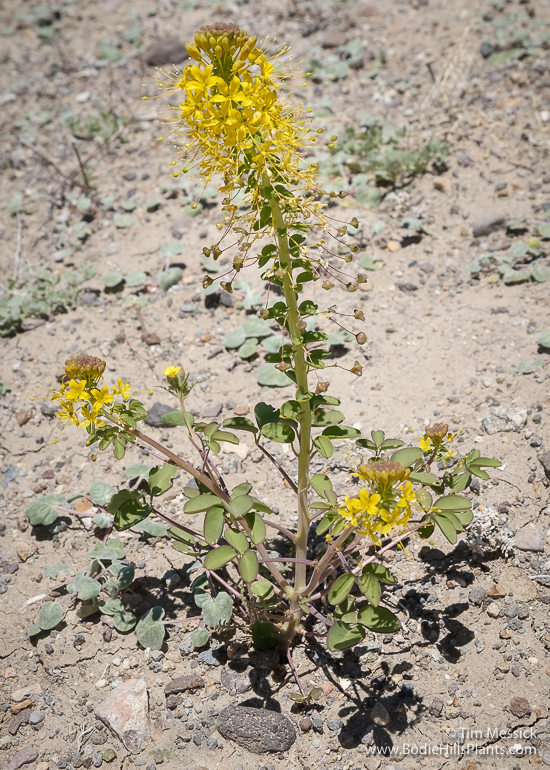
Cleomella hillmanii

Hillman’s cleomella (Cleomella hillmanii) was locally abundant on a hillside crossed by the road. It looked just like many other hillsides out there, so why did the Cleomella favor this one in particular?

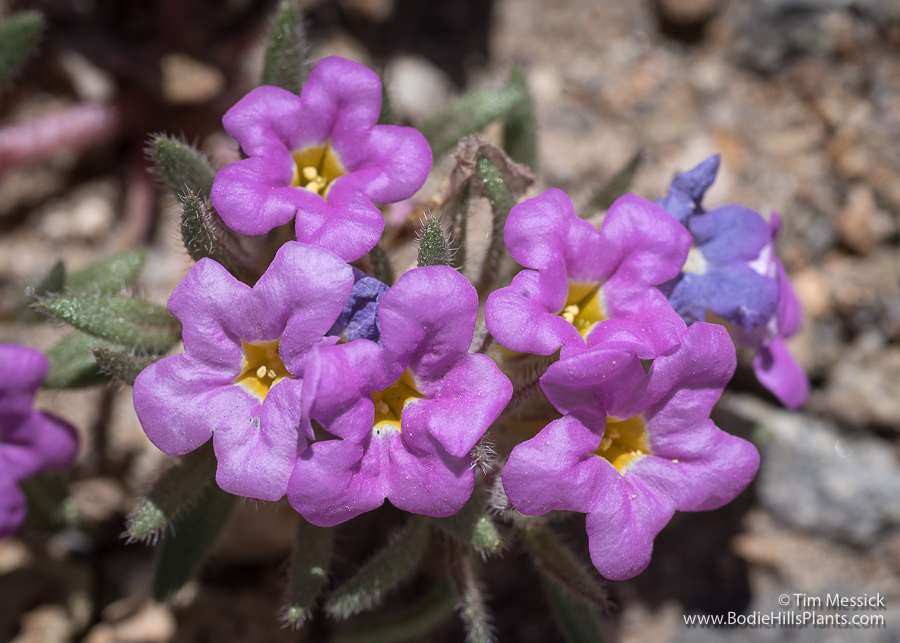
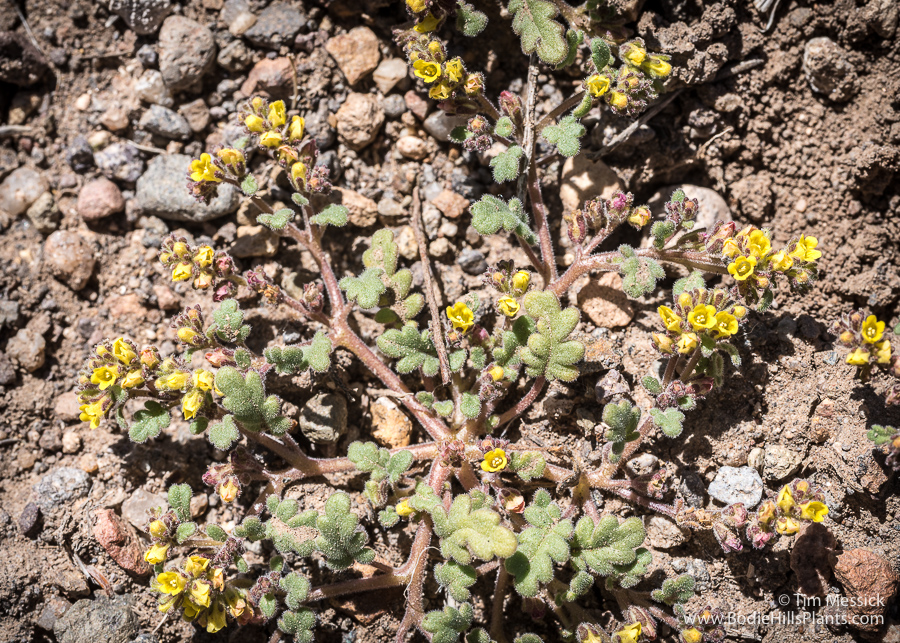
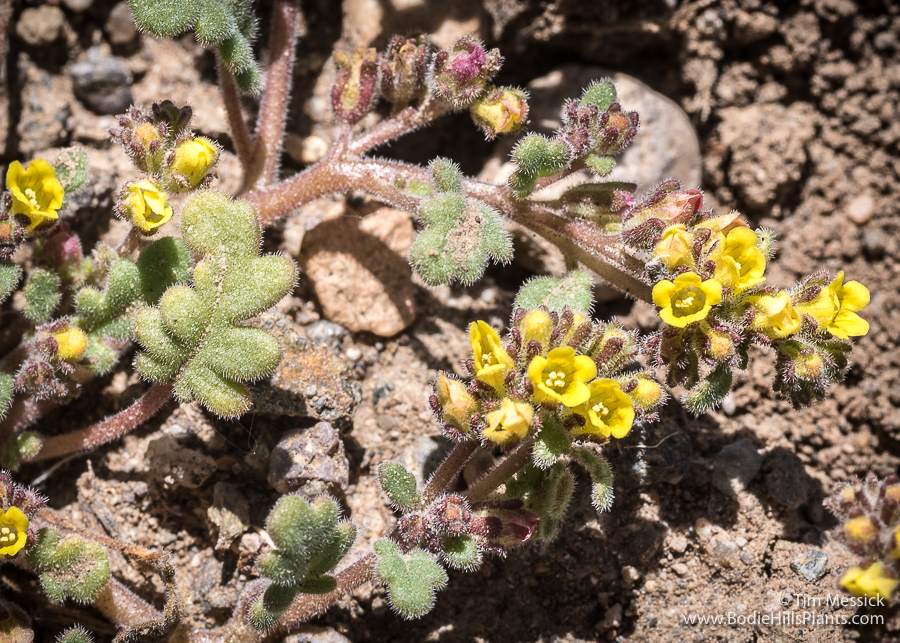
Last, but not least, there was the largest population and the largest individual plants of Mono phacelia (Phacelia monoensis) I’ve ever seen:

Phacelia monoensis

Phacelia monoensis

Phacelia monoensis


Copyright © Tim Messick 2017. All rights reserved.
DOWNLOAD THE CHECKLIST

Plants of Hot Springs Valley: a New Checklist

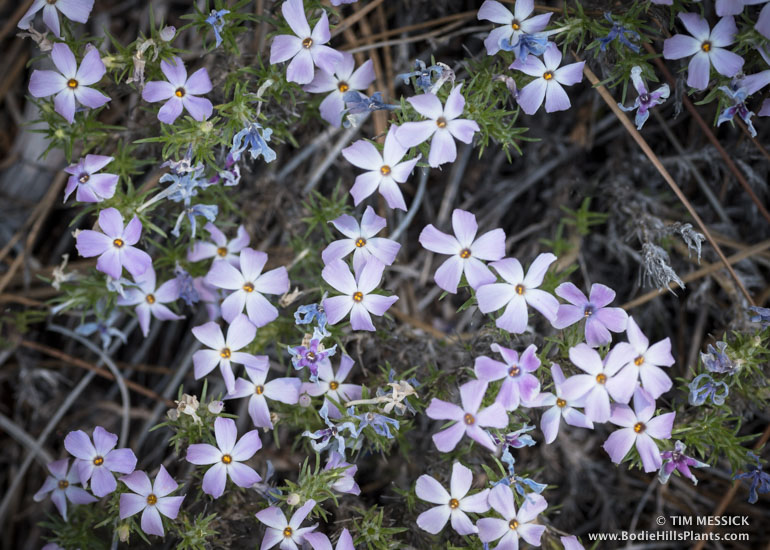
Phlox diffusa

A couple of years ago, at Grover Hot Springs State Park (in Alpine County, California), I asked if they had a list of plants in the park. “No, but we would sure like one!” So I Googled the topic and found that a botanical survey had been prepared by a group from UC Davis several years earlier, focusing on the flora and plant communities in the meadows and adjacent forest within the park boundaries.

Grover Hot Springs State Park

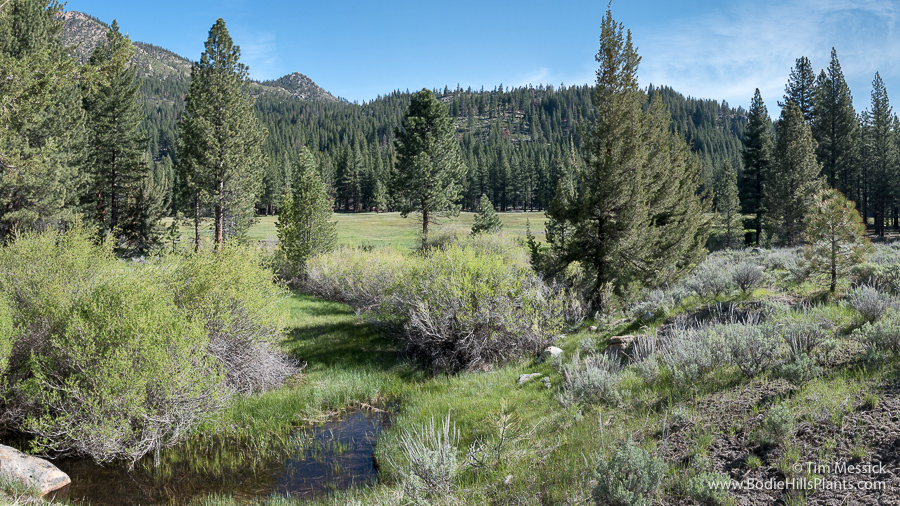
Near Hot Springs Creek, in the middle of Hot Springs Valley

The field surveys were conducted in 2010 by Ellen Dean and colleagues from the UC Davis Center for Plant Diversity. The report was submitted to the California Department of Parks and Recreation in 2011. This survey was very thorough, but it didn’t encompass all of Hot Springs Valley, some of which is outside the park boundaries, within Humboldt-Toiyabe National Forest. Most of the trail to the waterfalls at the west end of the valley (a popular hiking destination) is outside the UC Davis survey area.

Grover Hot Springs State Park

Hot Springs Valley and the alkaline meadows below the springs

I wanted a list for the whole valley—covering as much as possible of the areas commonly seen by visitors throughout Hot Springs Valley. So over the last couple of summers I’ve explored the valley and added a few dozen species to the 278 taxa listed in the UC Davis report. I contacted Ellen Dean, who kindly agreed to review and co-author the combined list, providing some other additions and corrections.

Map of Hot Springs Valley

I also prepared a new map of the area. Elevation contours are from the USGS Markleeville quad; trails, roads, and lower Buck Creek are redrawn from Google Earth.

The printed list is available at the park (unless they run out), or you can download a PDF to print yourself, right here. (It’s also on the Plant Lists and Floras page at the UC Davis Center for Plant Diversity—go see what else they have to offer.)

Grover Hot Springs is nearly a two-hour drive from Bodie, but these places are connected: they are the two oldest California State Parks on the east side of the Sierra Nevada, the Friends of Grover Hot Springs is a branch of the Bodie Foundation, and over a period of many years, numerous staff have worked at both parks. Now you can also download plant lists for both areas from the same web page.

Grover Hot Springs State Park

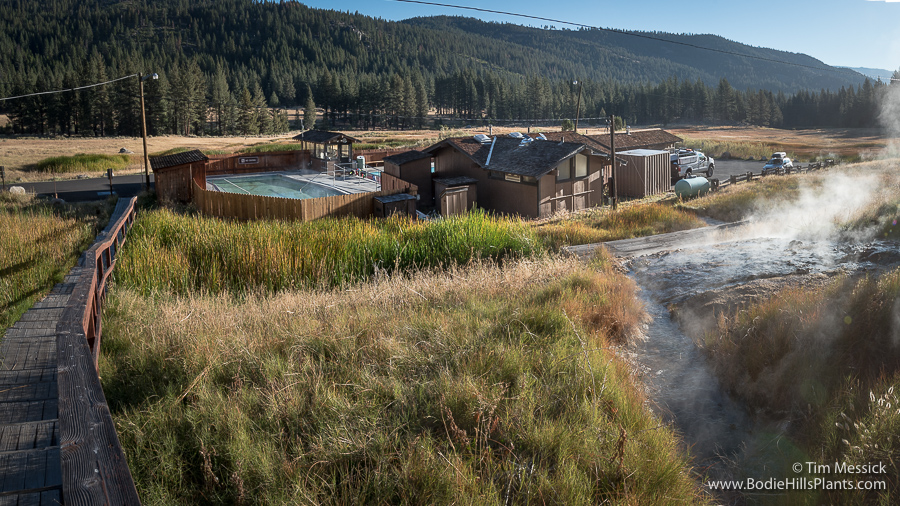
The pools at Grover Hot Springs


Copyright © Tim Messick 2017. All rights reserved.
DOWNLOAD THE BODIE HILLS CHECKLIST

A Fen in the High Desert

Cinnabar Canyon Bog

There’s a tiny fen (about one-half acre in area) within a somewhat larger meadow (about 1 acre) in Cinnabar Canyon in the Bodie Hills. The most abundant and characteristic plant in this meadow is a Sphagnum, or peat moss (possibly S. fimbriatum, but this needs to be checked using the most recent keys). The peat growth is deep and spongy wet, even late into the dry season. It’s a “mound fen” — water seeps slowly from a spring at the highest point in the meadow. Vascular plants in the meadow include abundant Nebraska sedge (Carex nebrascensis) and Tufted hair grass (Deschanpsia cespitosa), with a few very scrawny Swamp laurel (Kalmia polifolia) plants. The Kalmia was probably more robust and much more at home here during the cooler climate of the Little Ice Age (circa 1300 to 1850).

Cinnabar Canyon Bog

Sphagnum sp.

Cinnabar Canyon Bog

Kalmia polifolia

Cinnabar Canyon Bog

Carex and Deschampsia

This place fills me with questions, but skimming through the on-line literature about peatlands in the Great Basin and Sierra Nevada reveals very few answers.

Cinnabar Canyon Bog

Why is this bog here? What is it about the geology, hydrology, or history if this place that led to the formation (or persistence?) of a fen here, and not in any number of other seemingly similar meadows? Why aren’t there more peaty wet meadows in the Bodie Hills? (There is a suggestion in the literature of just one other that I haven’t seen, near Dry Lakes Plateau.)

Cinnabar Canyon Bog

How long has the fen been here? Peat deposits at other locations in the Great Basin and beyond (some actively growing, some not) have been examined to determine the relative abundance of different kinds of pollen and diatoms at various depths. The peat deposits can be dated at various depths with the aid of identifiable volcanic ash layers. These findings are used to infer changes in vegetation and climate over centuries or millennia. I’m not a palynologist, but I would love to know what a few core samples might tell us about the history of this place.

Cinnabar Canyon Bog

Are there invertebrates that favor these acidic fens, and are they present here? Is there anything unusual about the chemistry of the water in this spring? The water feels cold, but how does the hydrology of this meadow relate to the band of hydrothermal activity (some still active, some long dormant) extending from roughly Cinnabar Canyon northwest to Travertine Hot Sprigs, near Bridgeport?

Cinnabar Canyon Bog

The spring

Unfortunately, the meadow is not in the best of shape. I wish it could be fenced. Trampling by sheep has disturbed the surface and shallow subsurface of the growing peat layer. (But it looked about the same 35 years ago.) This trampling probably reduces the abundance of some plants, degrades the habitat for some invertebrates, and introduces nutrients unfavorable to some of the flora and fauna here.

Cinnabar Canyon Bog

Trampled peat


Copyright © Tim Messick 2017. All rights reserved.
DOWNLOAD THE CHECKLIST