Tag Archives: Natural History

Another Swarm of Quakes

Late last December, three moderate earthquakes hit Fletcher Valley and rattled much of the eastern Sierra Nevada. An historic stone building at Ninemile Ranch was seriously damaged, and brick walls all around Bodie were tested for their strength. Every day since that event, very small aftershocks have continued to jiggle the valley east of the Bodie Hills.

2017-04-14 Fletcher quakes map

This week, another concentrated swarm of very small quakes (magnitude 0.1 to 2.6) has appeared under Alkali Valley, about 10 miles southeast of the Fletcher Valley epicenters, just east of Mt. Hicks, at the eastern corner of the Bodie Hills. The aftershocks have been tapering off in Fletcher Valley (only 28 in the last 7 days), but Alkali Valley has felt 120 tremors in just the last 2 days. The maps above and below are from the US Geological Survey’s “Latest Earthquakes” web map of the area (to which I’ve added some place names).
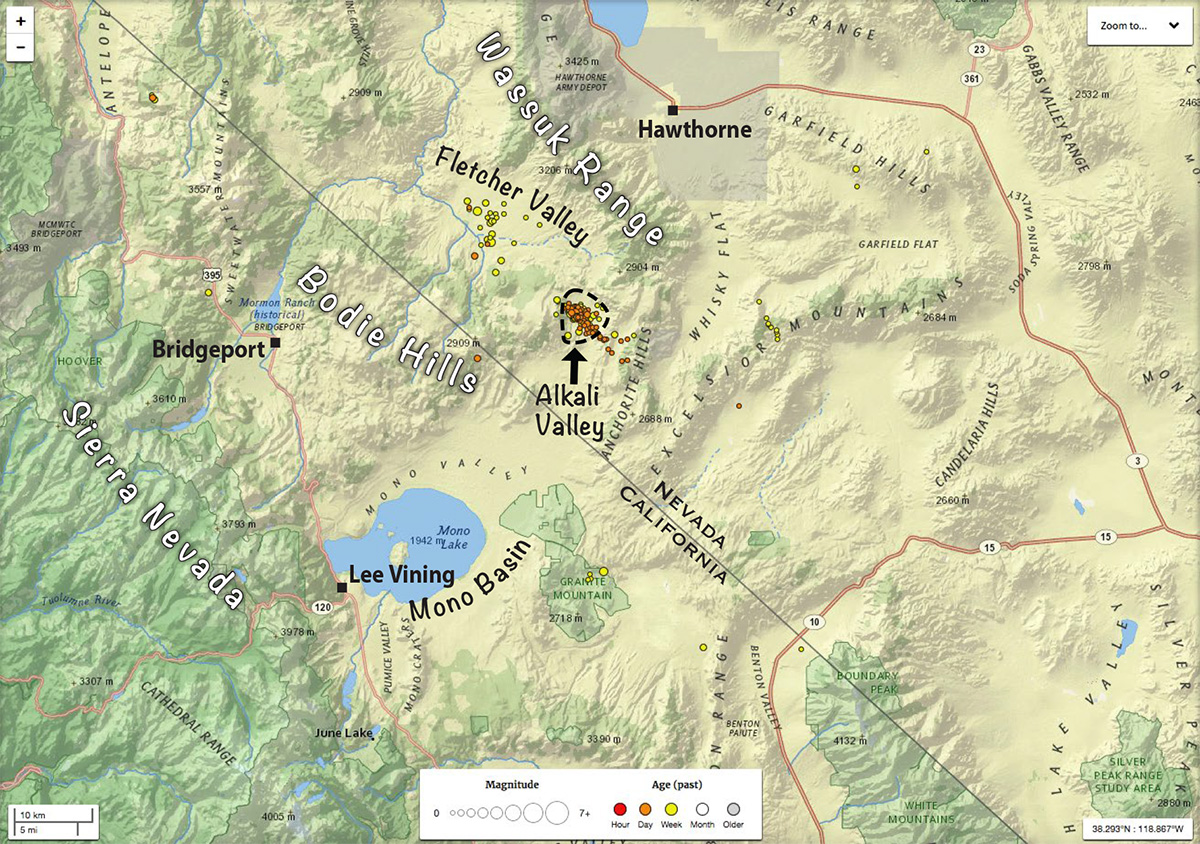
2017-04-14 Fletcher quakes context

Will Alkali Valley experience a stronger event soon—one that people in the area could actually feel? Maybe not. We’ll see. The region east of Mono Lake and the Bodie Hills is part of a seismically active region along the west edge of the Great Basin, known as the Walker Lane. Just 4 miles north of the Alkali Valley tremors is the most recent volcanic feature adjacent to the Bodie Hills—the late Pleistocene (less than 100,000 years old) trachyandesite lava dome of Mud Spring. Earlier in the Pleistocene, Lake Russel (the much larger ancestral Mono Lake) actually overflowed northward from what is now Alkali Valley, into Fletcher Valley and the East Walker River. Volcanism and uplift in the Mount Hicks area eventually raised the outlet higher than the fluctuating lake level, and a different spillway developed later, southeastward into Adobe Valley.

This is an actively evolving terrain, even on a human timescale. That’s just one of the reasons I love the Great Basin and eastern Sierra Nevada landscape.

UPDATE a week later: 204 quakes in the Alkali Valley area during the last 7 days. The strongest, magnitude 3.1.


Copyright © Tim Messick 2017. All rights reserved.
DOWNLOAD THE CHECKLIST
Food of the Gods in the Bodie Hills

How can a scrawny plant, growing in disturbed soils, with painfully sharp spines all over its fruits come to be named  for the mythical “food of the Greek gods”—Ambrosia—a name also related, apparently, to the Greek word for immortality, αθανασία (athanasia)? Carl Linnaeus himself, the “father of modern taxonomy,” bestowed the name in 1754. But why Ambrosia? I haven’t found an explanation. The authoritative Flora North America says “allusion unclear.” One might say it’s a crusty old botanist’s joke on posterity, but I won’t impugn the intentions of the great Linnaeus. The genus isn’t native to Sweden and he may have examined only a few specimens from North America (collected by others). Maybe they smelled nice, but he probably didn’t get to know the genus well enough.

Ambrosia

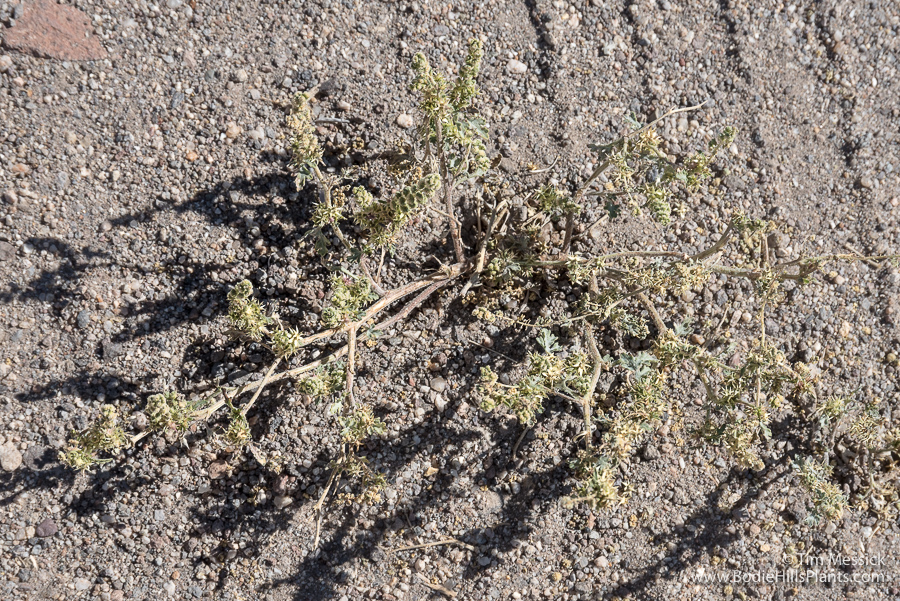
Ambrosia acanthicarpa, annual bur-weed or annual ragweed, grows on disturbed, sandy soils, often along roadsides, throughout much of western—especially southwestern—North America. The plants seen here were on a dirt road near the north edge of the Bodie Hills, in Lyon County, Nevada. I’ve also seen it beside Hwy 270 at Mormon Meadow and I’ve probably overlooked it at other locations. (Though you’re not likely to overlook it if you encounter it while wearing open-toed sandals.)

It’s not immediately obvious, but Ambrosia is a composite—in the sunflower family (Asteraceae). There are more than 40 species of Ambrosia in the New World, mostly in western North America. Ambrosia now includes plants formerly placed in Hymenoclea and Franseria.

Ambrosia

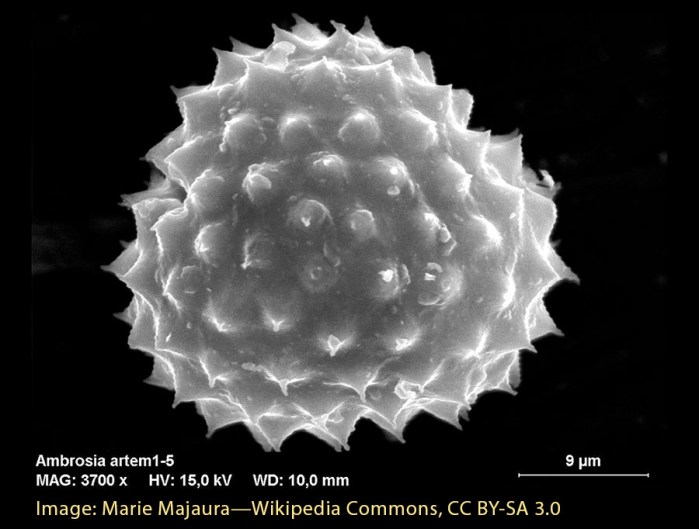
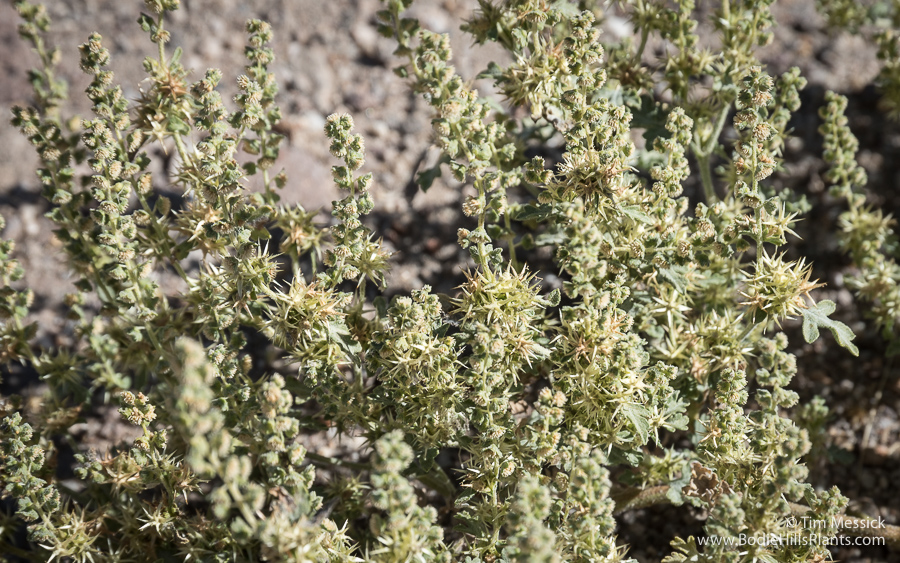
Despite its vicious demeanor, Ambrosia has an intriguing anatomy. The male flowers, bulging with stamens, are tightly clustered into numerous small heads, dangling along the axis of a tall raceme. The pollen shed from those anthers causes agonizing irritation of eyes and sinuses in anyone getting a face-full of the stuff. Magnified, the pollen grains look like lethal medieval weapons.

ambrosia_artem-wikipedia

While the male flowers will insult your eyes and upper respiratory system, it is the female flowers that will draw blood from your toes and fingers. Pistillate flowers are in the axils of leaves below the staminate inflorescence—the better to catch those heavily armed pollen grains. They lack corollas and are encased, usually one at a time, in a long-spined “bur.” (These spines are derived from the paleas—in Asteraceae, the usually very thin, papery, scale-like or bristle-like “chaffy bracts” at the base of each flower.)  As the fruit matures, the bur becomes very hard. The spines stiffen and become very sharp.

Ambrosia

Did you notice the tire tracks in the first photo? Above you see evidence for one of this plant’s long-range dispersal mechanisms. The mature burs attach themselves freely to automobile tires. No doubt this is one reason Ambrosia acanthicarpa is fairly common along disturbed road shoulders and many lesser-used unpaved tracks throughout the American west.


Copyright © Tim Messick 2017. All rights reserved.
DOWNLOAD THE CHECKLIST
The Checklist: New 2017 Edition

I’ve made some corrections and additions to Plants of the Bodie Hills: an Annotated Checklist, based on some fieldwork and other research during 2016. CLICK HERE to visit the Downloads page. The January 2017 edition of the checklist is a 47-page, 5.1 mb PDF file. [UPDATE, January 16: A few more typos corrected. You may want to download again if you downloaded prior to 1-16-2017.]

Checklist Cover 2017

The Bodie Hills encompass about 417 square miles in northern Mono County, California, western Mineral County, Nevada, and southern-most Lyon County, Nevada. The checklist includes 679 taxa of vascular plants, of which 575 are definitely known to occur in the Bodie Hills and 104 others are considered likely to be present. The list includes 52 families of dicots, 15 families of monocots, and 8 families of vascular cryptogams.

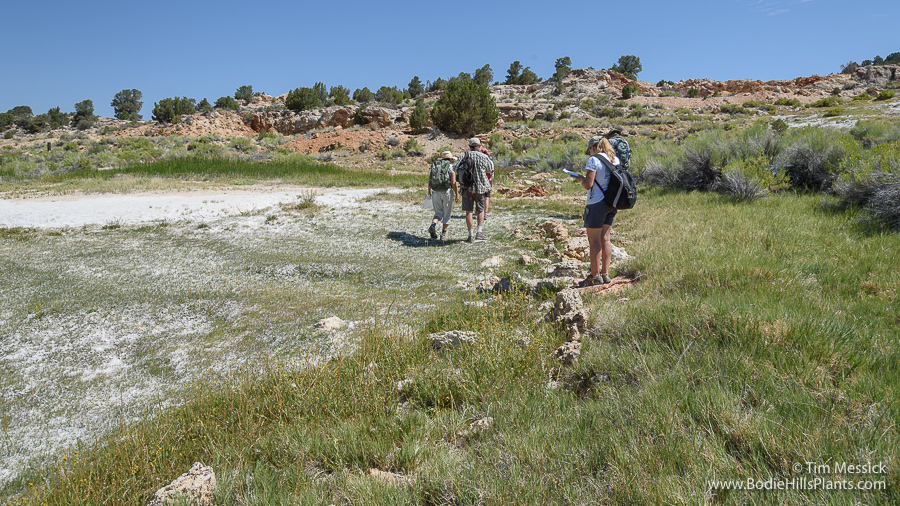
Travertine Hot Springs

Travertine Hot Springs has extensive alkaline wet meadows and dry outcrops.

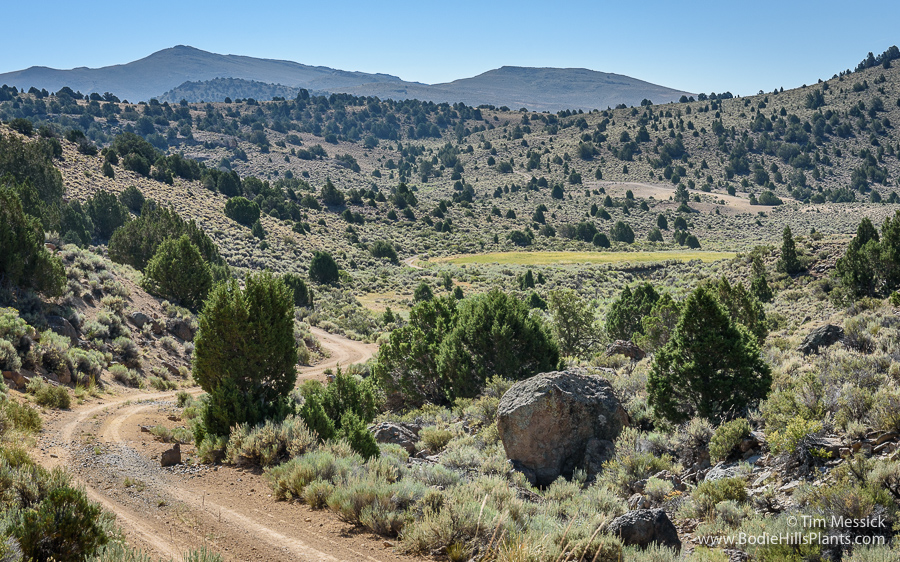
Cinnabar Canyon

Cinnabar Canyon contains pinyon-juniper woodland and an unusual wet meadow.

Bodie Mountain

Bodie Mountain supports high-altitude sagebrush scrub with lots of
cushion plants and several alpine species.

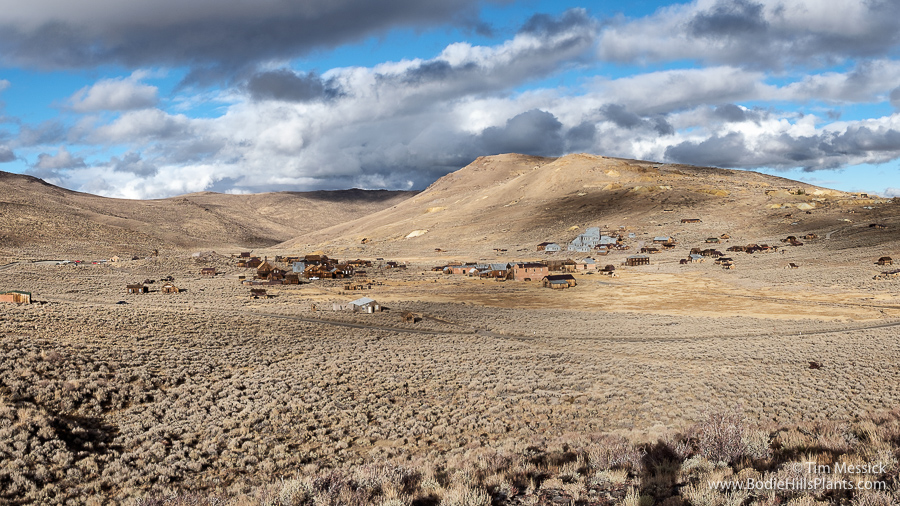
Bodie

Bodie is in the south-central Bodie Hills.


Copyright © Tim Messick 2017. All rights reserved.
DOWNLOAD THE CHECKLIST